THALIA, which stands for “Tunnelier artificiel d'initiation et d'approfondissement” (Artificial Tunnel Boring Machine for Initiation and Advanced Training), is software that simulates the operation of a tunnel boring machine (TBM) of the earth pressure balance (EPB), slurry pressure, or variable density (VD) type for training future pilots.
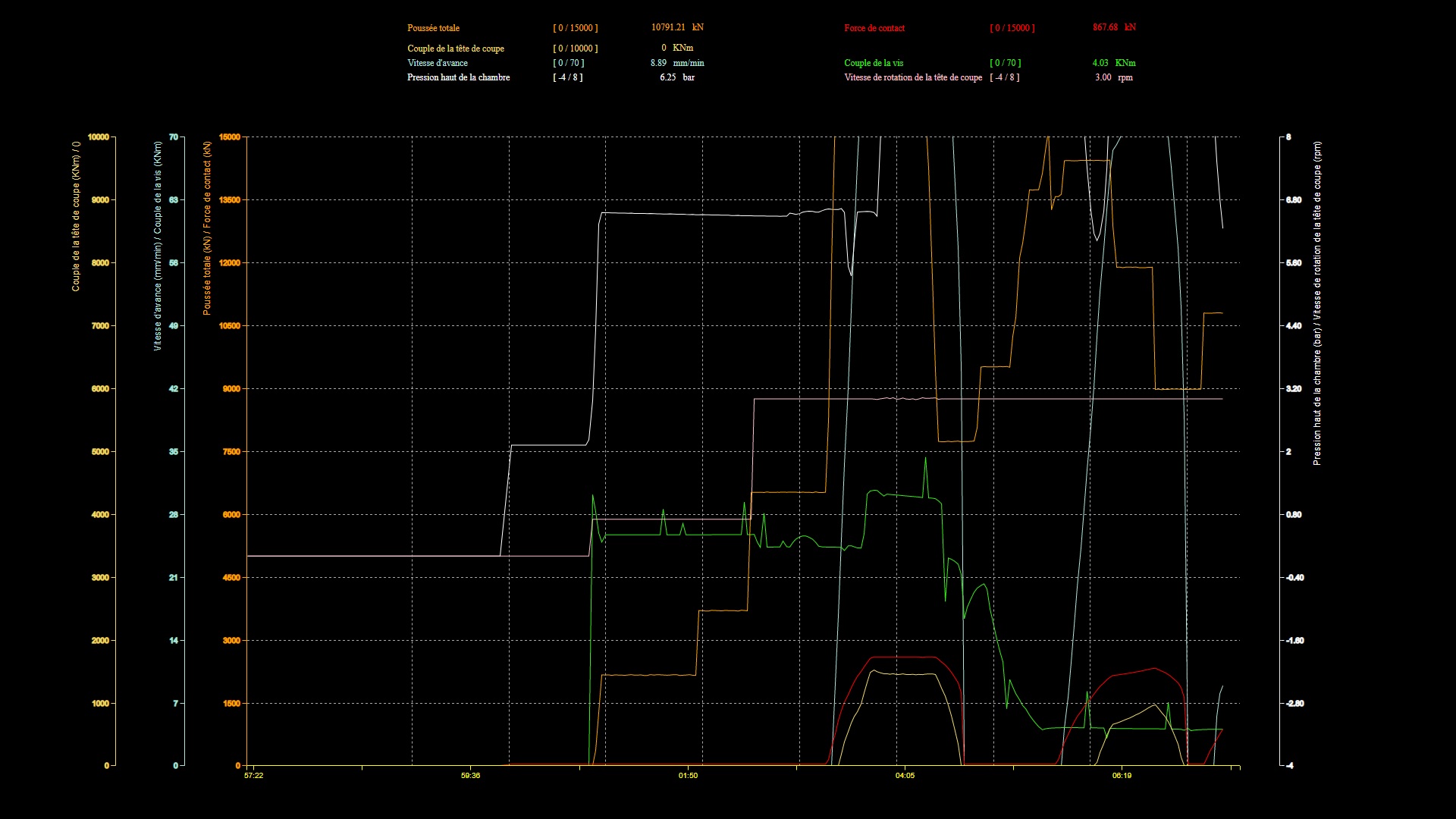
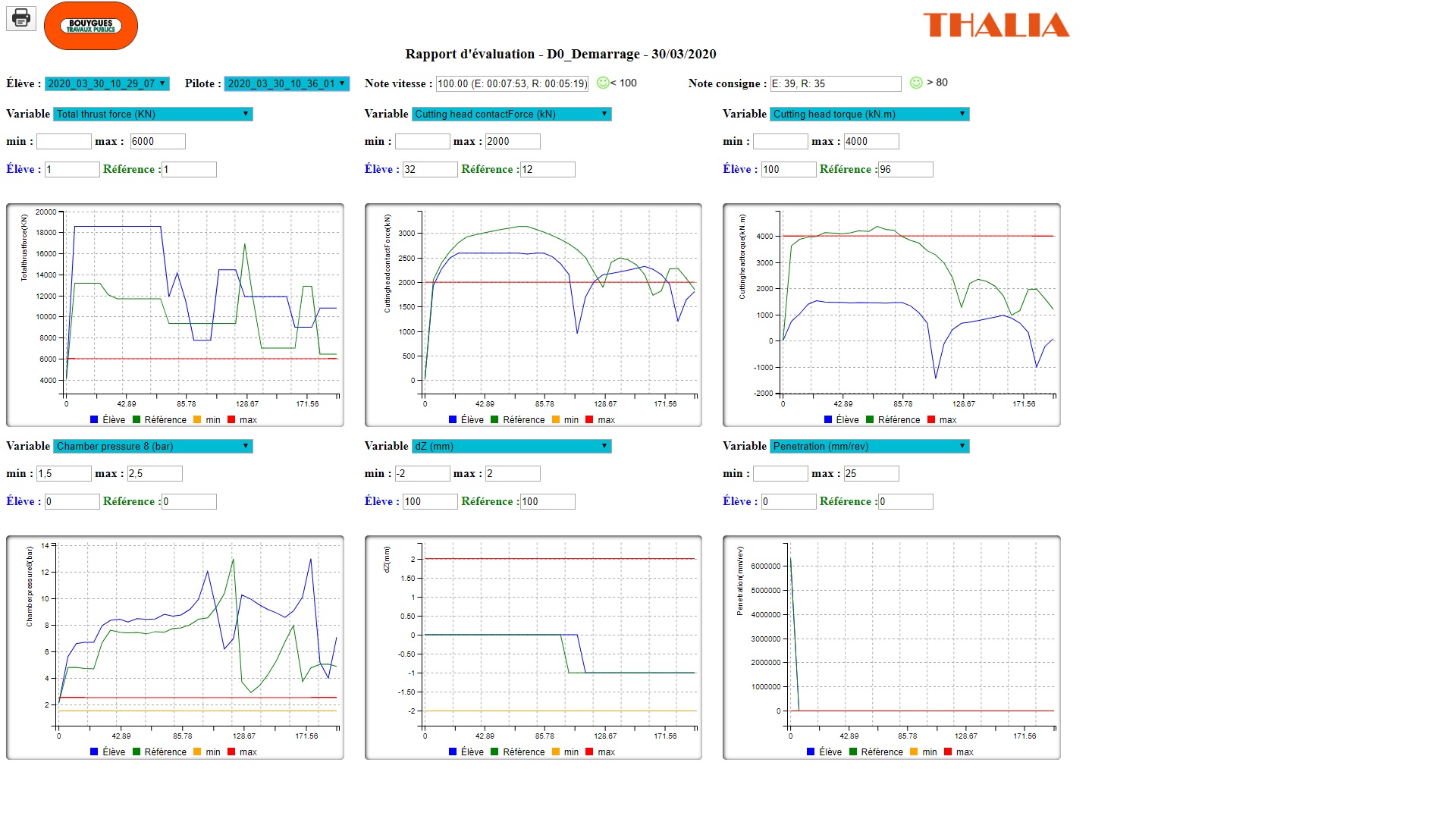
This simulator developed by PROLEXIA for BOUYGUES Travaux Publics enables the physical behavior of the tunnel boring machine to be reproduced in a series of predefined situations (scenarios) and the system data to be analyzed at the end of the excavation in order toevaluate pilot's skillsIt also includes a scenario editor that allows you to create new exercises by finely tuning the machine's technical characteristics, defining a geological section, and incorporating events such as water ingress due to the presence of a fault in the ground, for example.
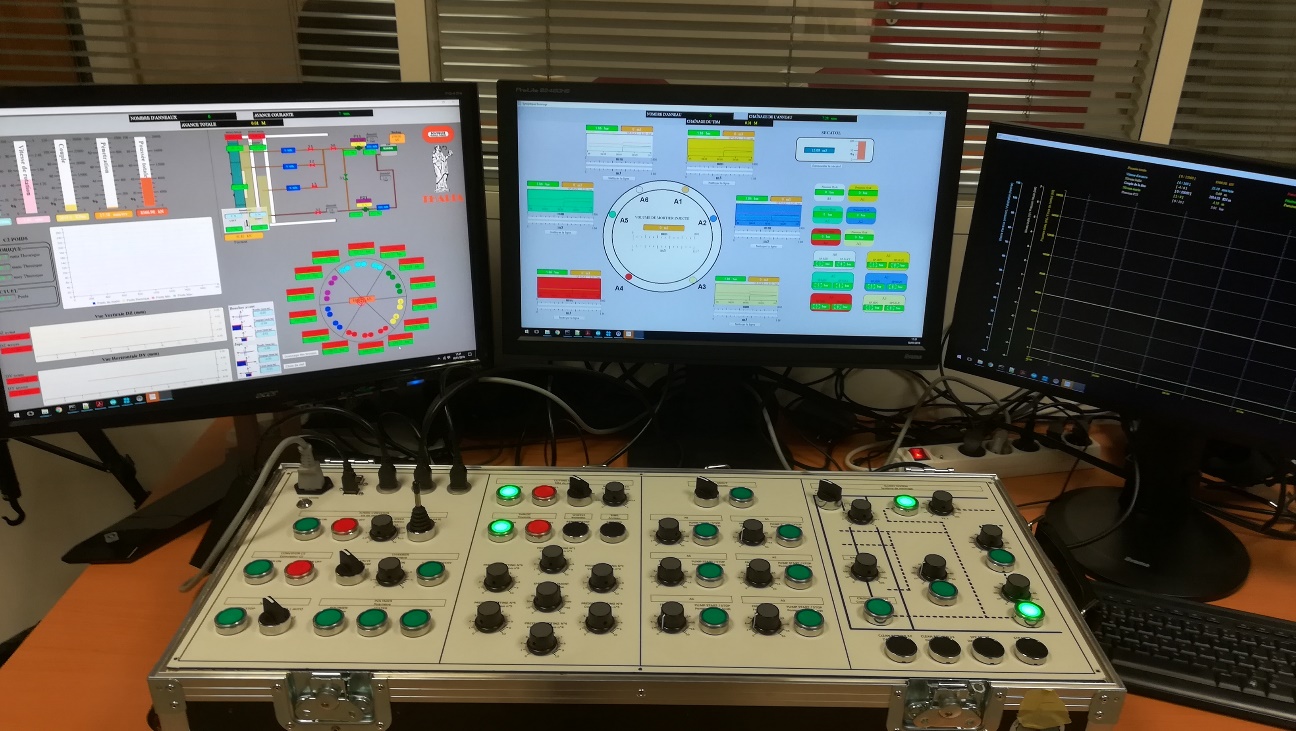
This simulator can be piloted by a physical console, also developed by PROLEXIA, similar to the control station found in a real tunnel boring machine. It can also be operated via a touchscreen interface for more flexible deployment.
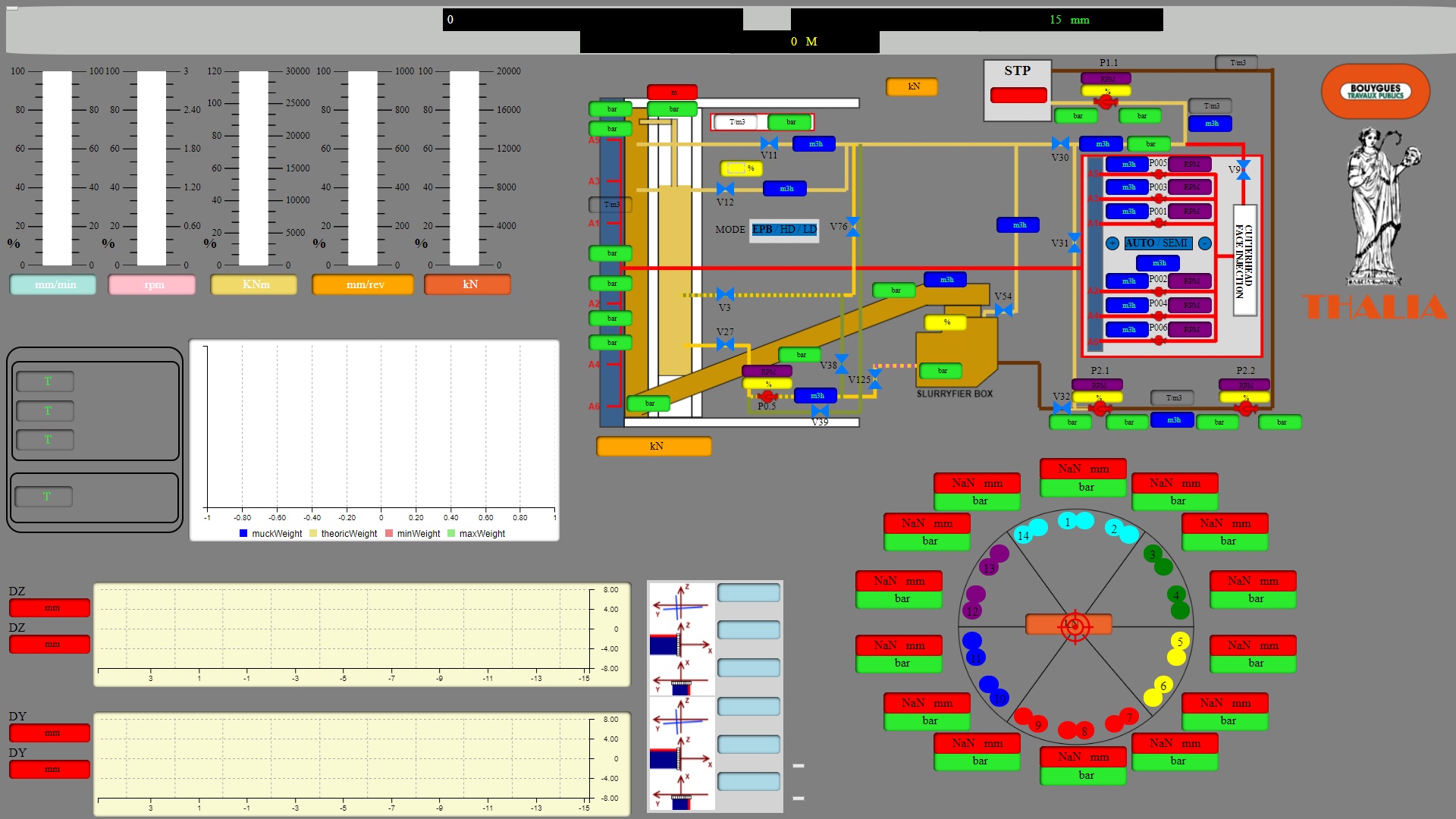
THALIA integrates a simulation of all the physical behaviors of the tunnel boring machine:
solid mechanics: forces, torques, and wear related to interactions with the ground during excavation and to the thrust system
fluid mechanics: material exchange, sludge extraction
industrial hydraulics: marinating circuit
automation: automatic mortar and additive injection control system, trajectory control
Many scenarios have already been carried out by BOUYGUES Travaux Publics using the integrated editor in order to reproduce situations such as geological variations, support control, screw blocking, blockage, etc.
This software is used for all training and evaluation of BYTP teams, but also for training partner teams in the context of the work of The Grand Paris.
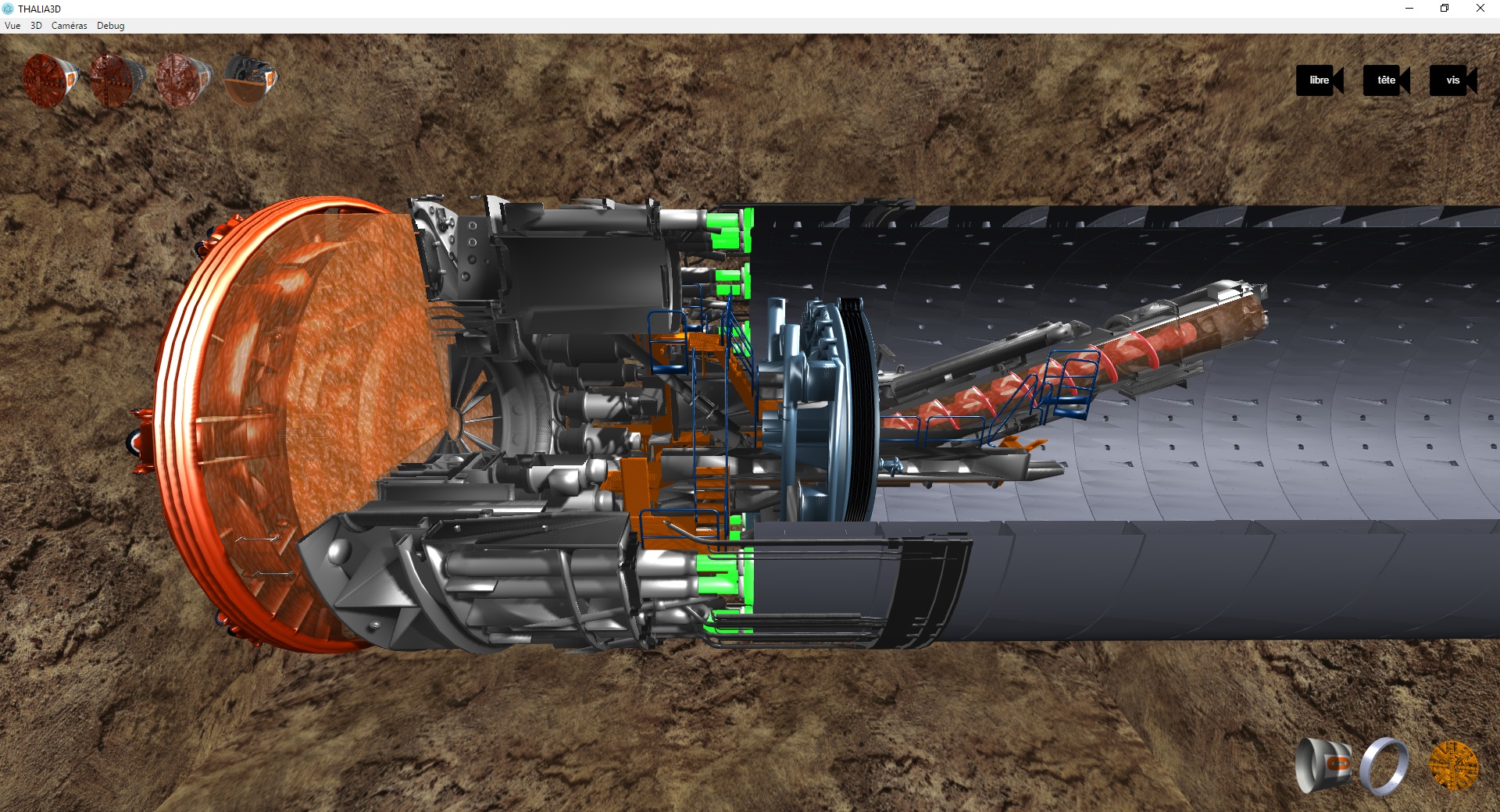
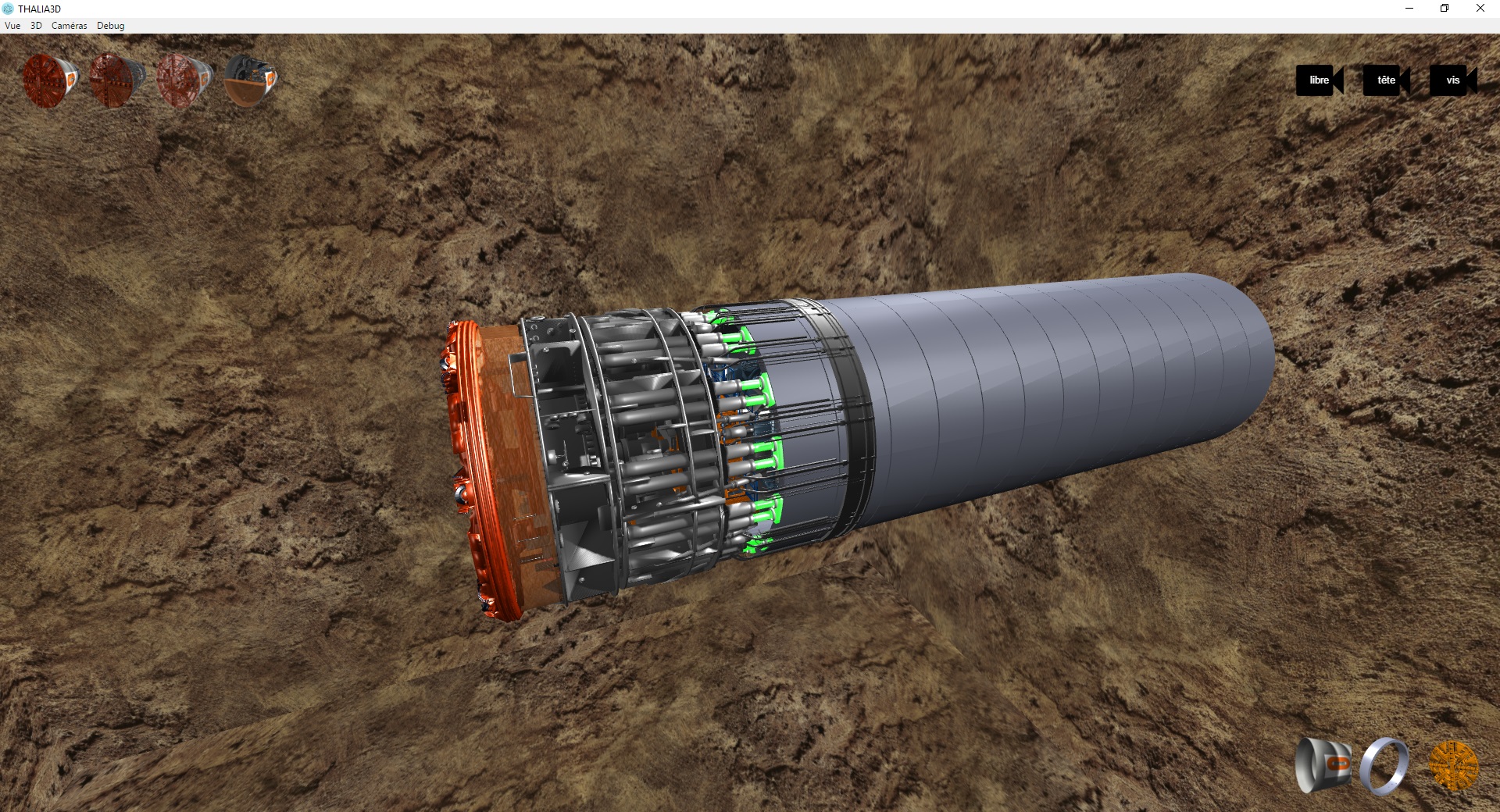
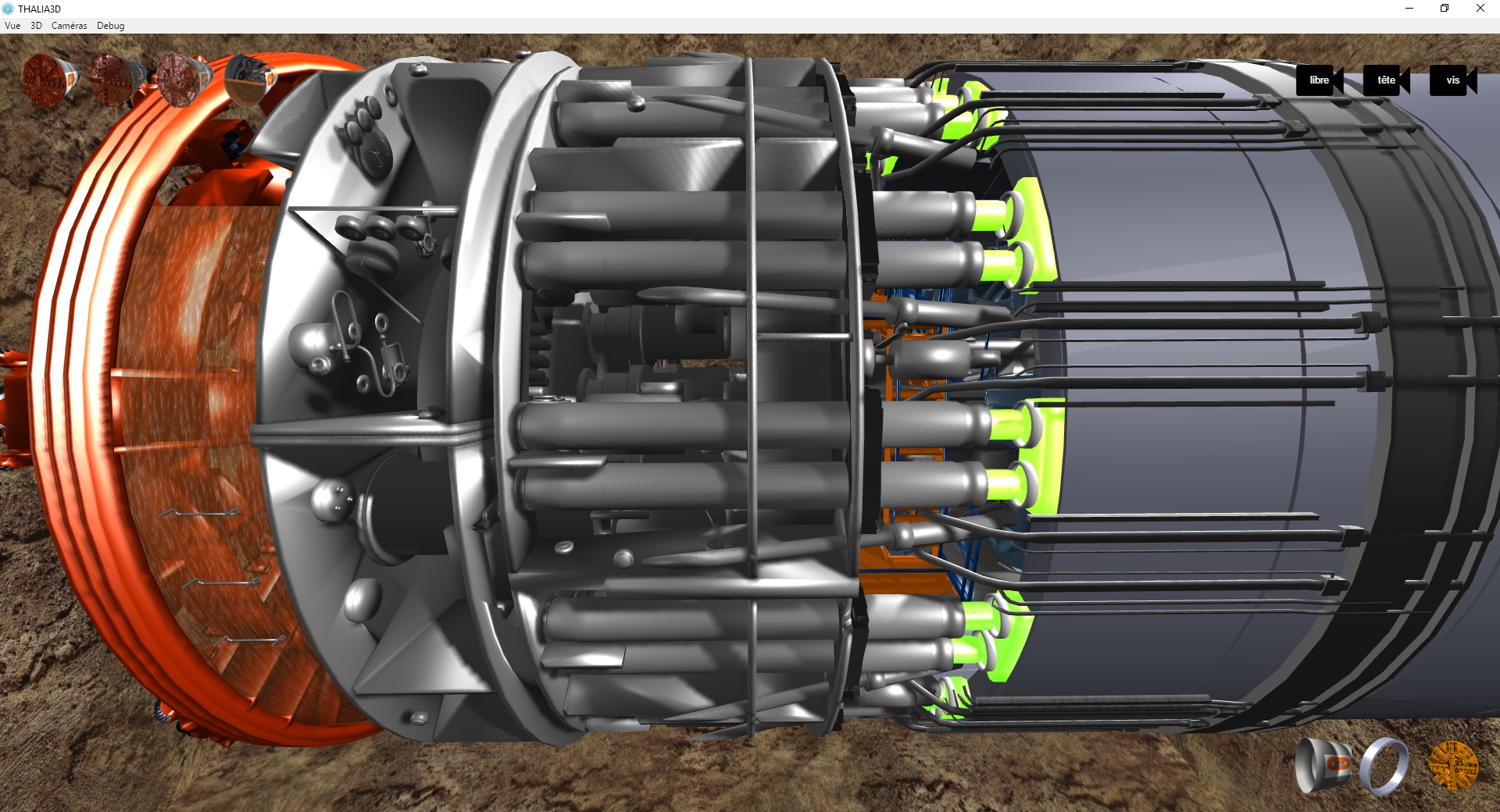
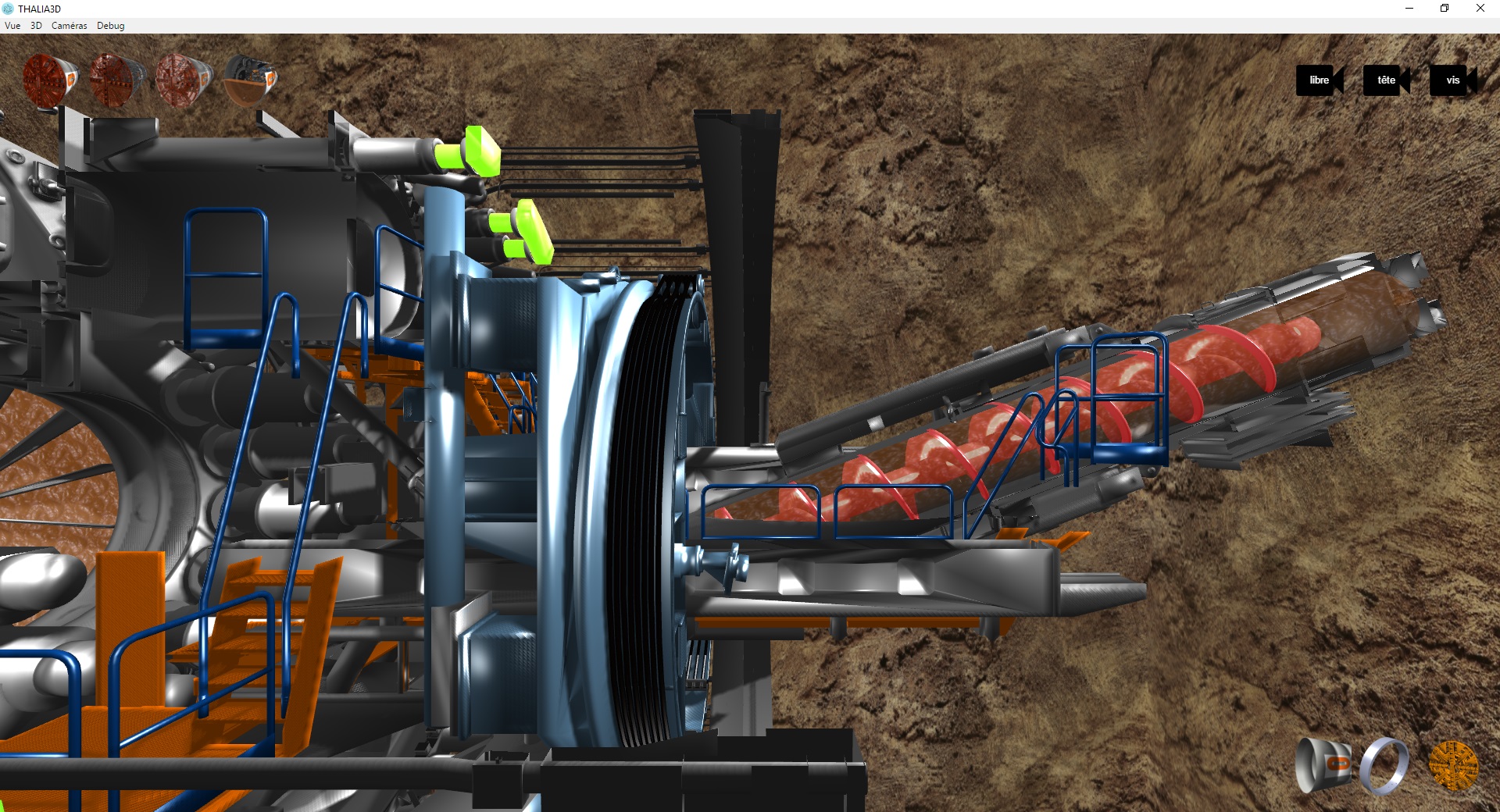
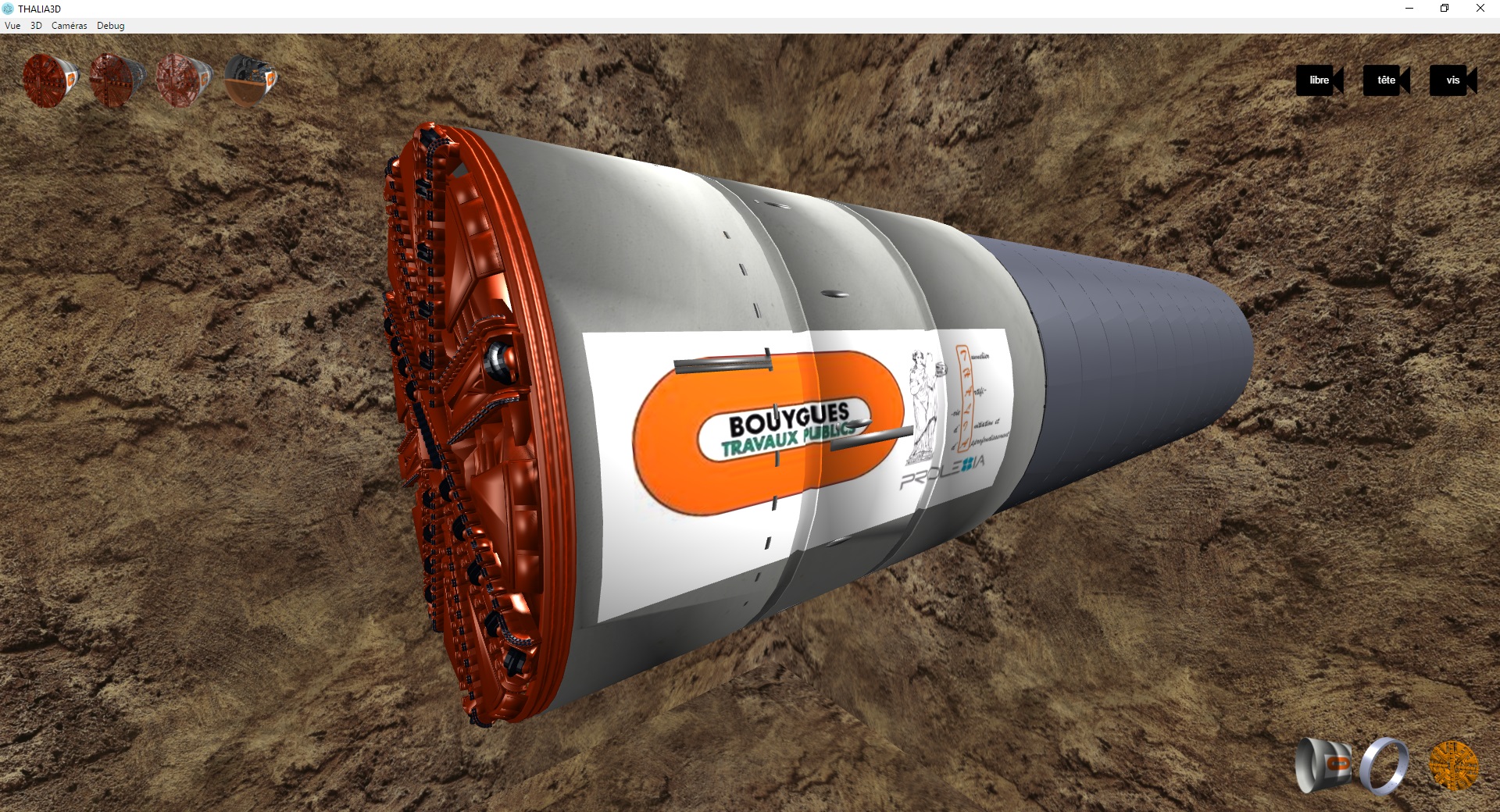
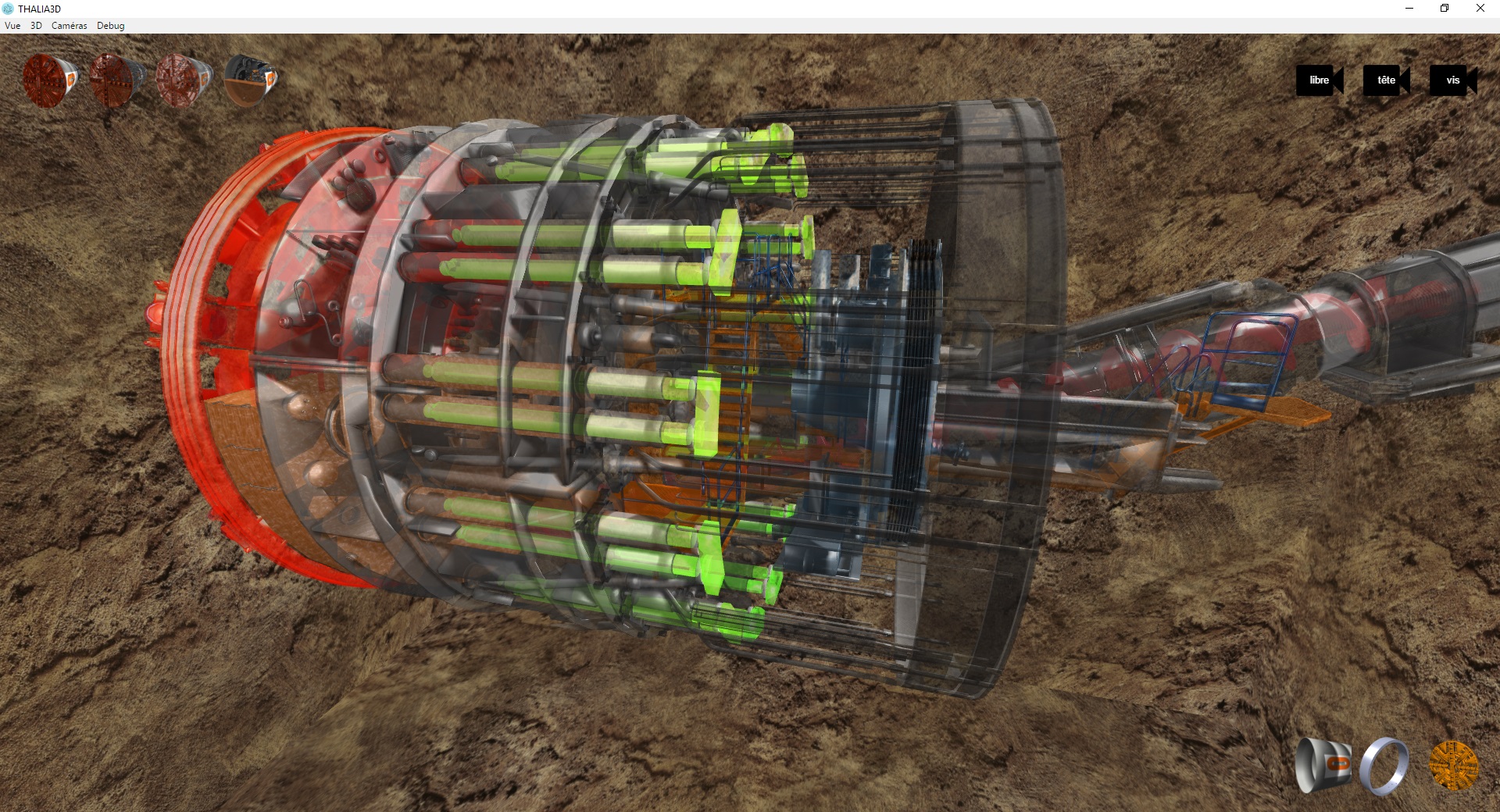
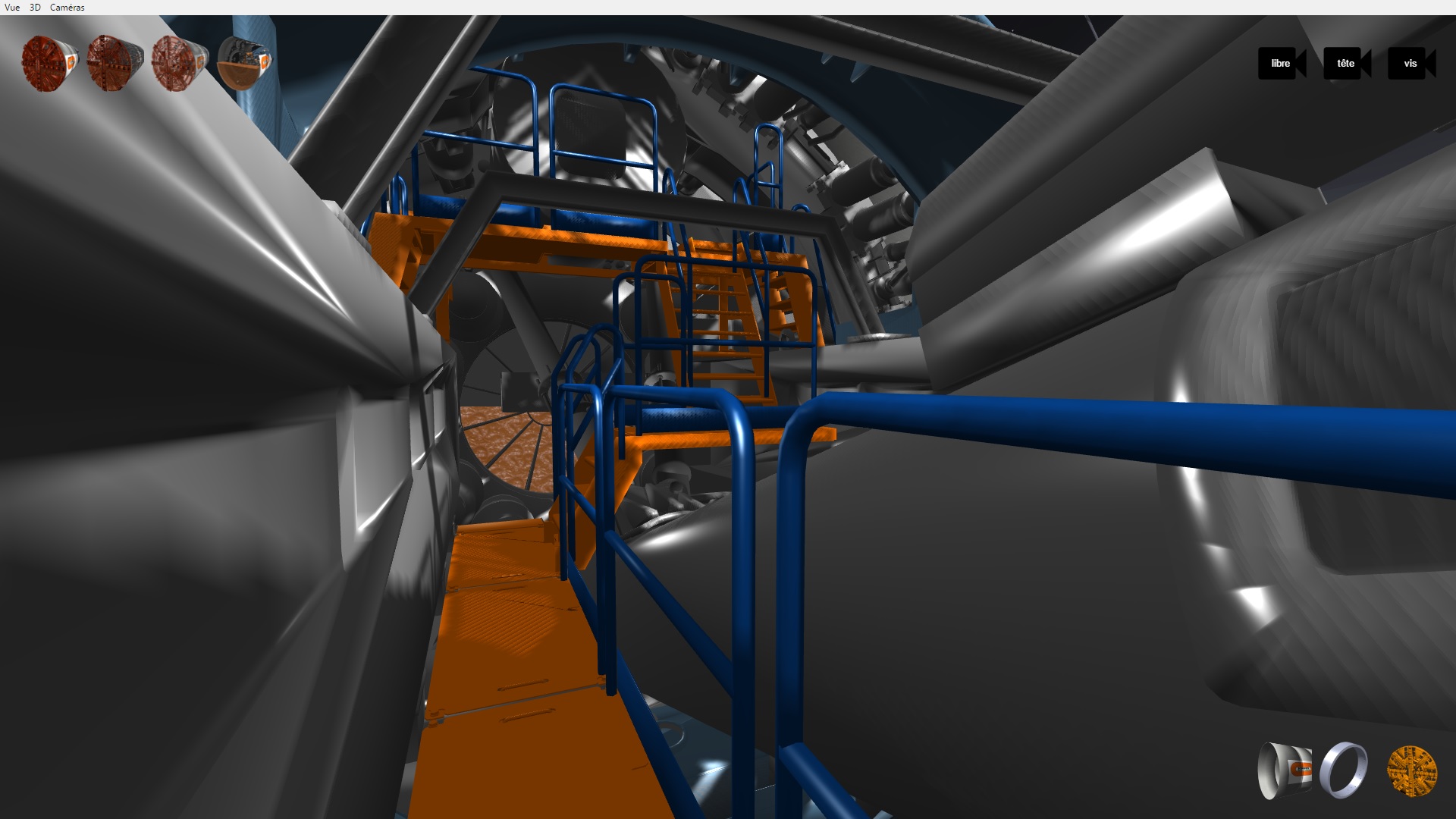
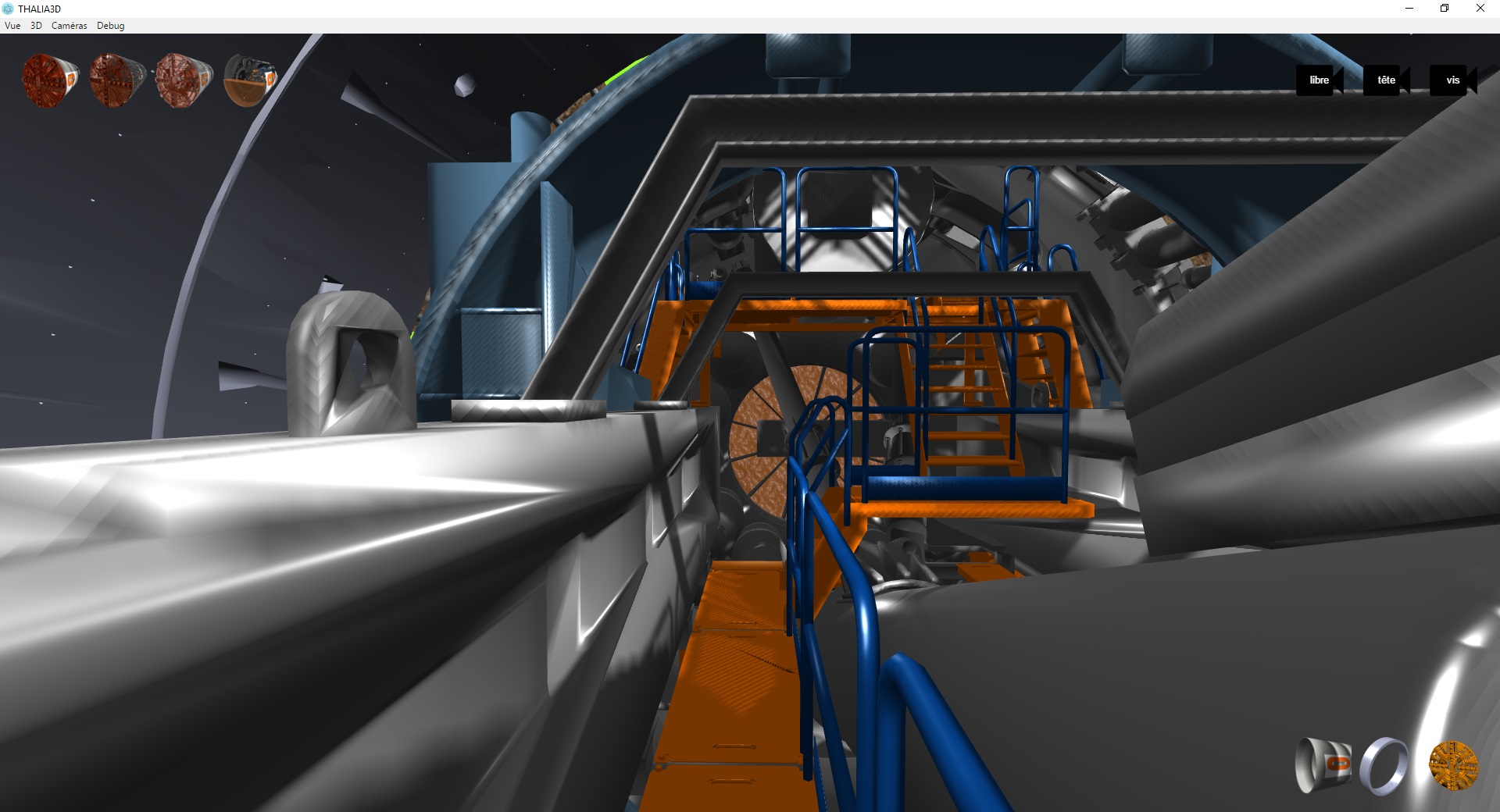
THALIA 3D
The Thalia simulator can also be coupled with a real-time 3D visualization to better understand the operation of the TBM.




 English
  French